How to Write a Web Design Brief
(+ Free Template)

read
Would you build a house without a detailed list of requirements or architectural plans? Of course not!
A website is no different. It requires a structured plan to ensure everything operates effectively and delivers the intended results.
Yet, many businesses rush into web design agencies, only stating they want a modern or clean website without setting clear expectations or precise requirements.
The next moment, they find themselves staring at a website that’s technically fine but is nowhere close to the vision they had in mind. A web design brief lays out your goals, audience, design preferences, technical requirements, and budget in a way that leaves no room for confusion.
In this guide, we’ll show you exactly how to write a website design brief that keeps your project on track and ensures you end up with a website that actually looks beautiful and delivers results.
But first things first, what is a web design brief?
What is a Web Design Brief?
A website design brief is a strategic document that outlines everything a web design agency needs to know before they start building a website.
A solid web design brief should answer these key questions:
-
-
- Why does this website need to exist? (The purpose and objectives)
- Who is it for? (The target audience and user experience goals)
- What do we want it to do? (Functional requirements and features)
- How should it look and feel? (Design preferences, brand identity, and inspirations)
- What’s the budget and timeline? (Because even the best ideas need constraints)
-
It aligns all stakeholders—clients, designers, developers, marketers, and decision-makers—so that everyone is pulling in the same direction.
Why is a Website Design Brief Important?
A well-written web design brief is a project’s insurance policy against wasted time, miscommunication, and spiraling costs.
Project failures aren’t uncommon—they’ve been known to cause the occasional headache for businesses over the years.
According to the Project Management Institute’s Pulse of the Profession® report, poor communication leads to 55% of failed projects.
Designers or design agencies aren’t mind-readers. Nobody is!
If you don’t tell them what your vision of the website looks like, you’ll end up with something that may “look nice” but doesn’t serve your business needs.
Many web projects start small but can quickly snowball into something that feels never-ending.
A web design brief locks in the features, timeline, and deliverables all in one place, so you don’t add last-minute “just one more thing” requests that derail the entire project.
It also reduces back-and-forth discussions and ensures designers get it right the first time.
Now that we outlined the importance of a design brief let’s see how you can create one for your website.
‘’Writing a web design brief isn’t complicated—it’s like following a good recipe. You just need the right ingredients listed in the right order to cook up a successful project.’’
How to Write a Web Design Brief (Step-by-Step)
You don’t need to be a designer or a website expert, you just need to know what you want and communicate it clearly.
Let’s break down this process step by step.
Step 1: Define Your Goals and Objectives
Before you even think about color schemes or fonts, ask yourself, why does this website need to exist?
If you can’t answer that, your designers won’t be able to build something that actually works.
For example:
-
-
- A law firm would want a site that builds credibility and generates inquiries from potential clients.
- A fitness brand could need an e-commerce store integrated with a blog to sell products while educating customers.
- A startup SaaS company may want to focus on converting visitors into demo sign-ups.
-
Be as specific as possible here.
The objective, “I want a website that looks good,” is not as clear as “I want a site that effectively communicates my brand, engages visitors, and drives them to take meaningful actions.” is.
This is just a one-liner example. Of course, you should expand on what your goals and objectives are with the website design.
It is important that you communicate as a team early on so decision makers, stakeholders, and marketing managers have the same expectations. (It happened to me that certain things were not outlined clearly, and I ended up having to redo some parts.)
Step 2: Identify Your Target Audience
Your website should be built for your audience, and for that, you need to know who exactly your audience is.
Don’t just go and tell your designer, “My audience is young professionals.” That’s way too broad. Give them a detailed customer persona that brings your audience to life.
Here is a comparison of the target audience in a website design brief example for a luxury skincare e-commerce site:
✖ “We target women aged 25-45 who like beauty products.”
✔ “Our ideal customer is Emma, a 32-year-old marketing manager who values high-end, organic skincare. She shops online 3-4 times a month, follows beauty influencers, and is willing to pay a premium for products with clean ingredients.”
Step 3: Outline Your Design Preferences
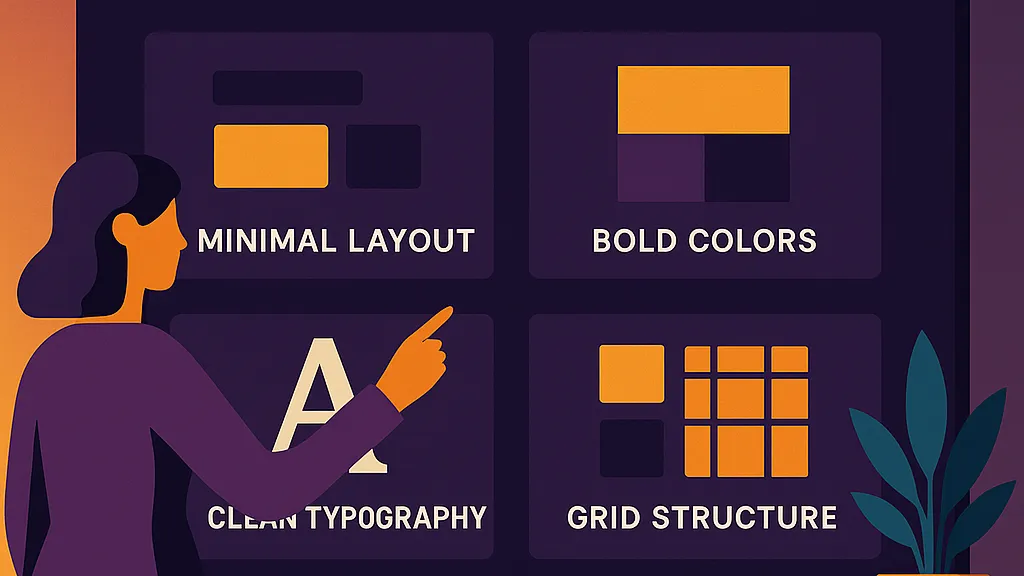
Now that you’ve defined your target audience and brought them to life through detailed personas, it’s time to consider how your customers’ preferences and expectations should shape the design of your website, all while still leaving room for your own unique taste and brand vision to shine through.
Describing your design ideas with words is super frustrating and wildly open to interpretation. The best way to communicate your vision is through visual references.
Saying, “I want a modern and clean website,” doesn’t help because “modern” means different things to different people.
Love the sleek, minimal look of Apple’s website? Mention it.
Want a bold, colorful feel like Nike’s site? Link it.
You may not be familiar with specific design genres like retrofuturism, minimalism, brutalism, or pop. That’s why providing references for us web design agencies can be incredibly helpful.
Add real-world examples of websites that embody your vision.
These don’t even have to be in your industry, you are referencing their layout, typography, use of images, and user experience.
Consider the emotion you want your website to evoke, so your designer can choose the right colors, fonts, and overall style to match.
If your business already has a logo, brand colors, or typography guidelines, include them in the brief.
Step 4: Specify Technical Requirements
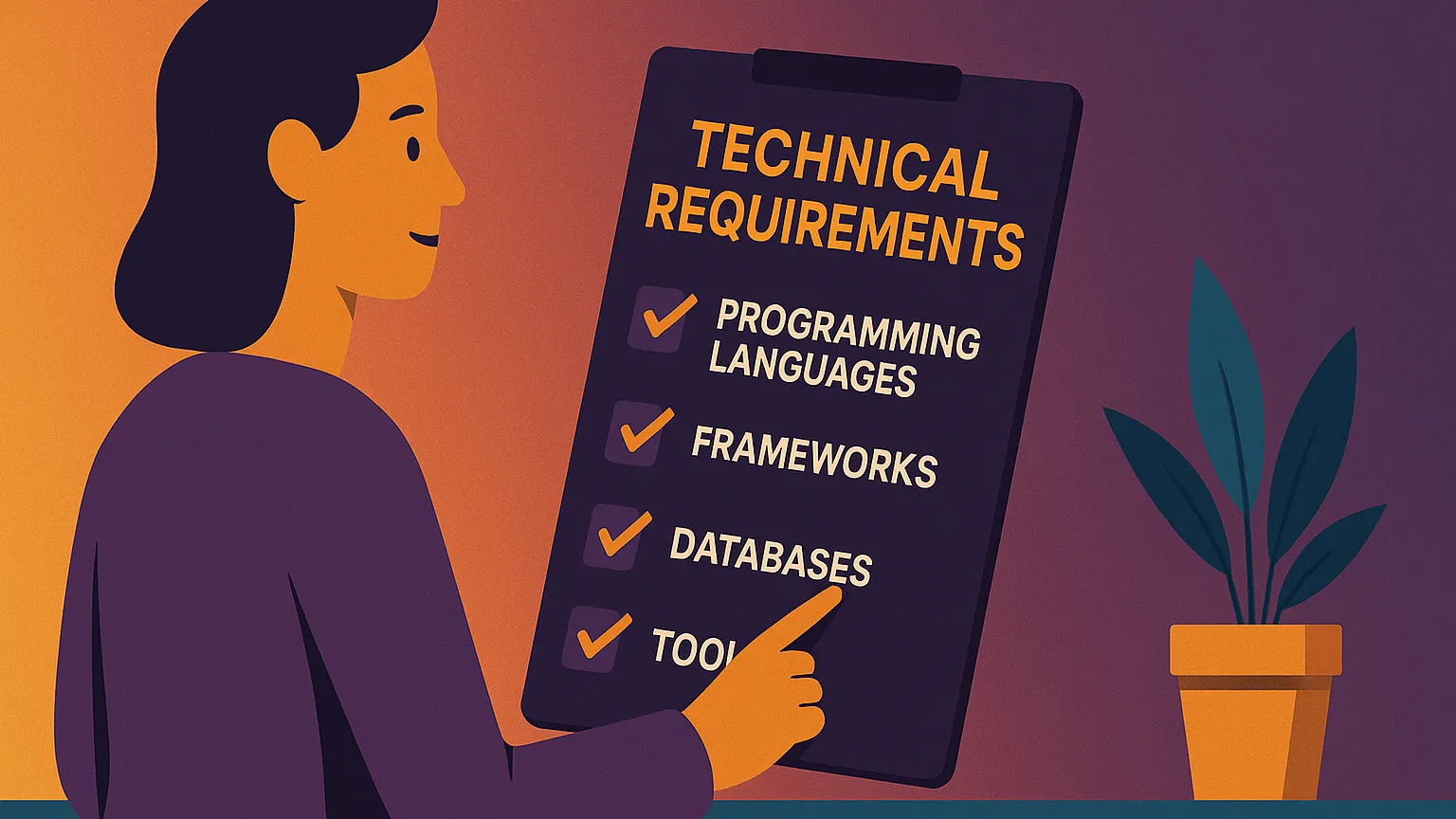
A stunning website will not bring the most value if everything function-wise is not listed clearly.
Your choice of the website platform (e.g., WordPress, Shopify, WebFlow, Squarespace, etc) impacts everything—from how easy it is to update your content, how it will/should scale in the future to how well your site performs under traffic spikes, even how search engines will perceive your site
Instead of leaving it up to chance, clearly state which platform you prefer and why. The agency will have the experience to also guide in chosing something that would be better.
You can also specify the hosting platform you’re using, along with any specific features that are essential for your website.
Step 5: Mention Your Website (If Any)
If you already have a website that you no longer want to use, add it to the web design brief.
It’s a goldmine of insights, even if it is a relic from the early 2000s that makes you cringe.
Think of it like bringing a ‘before’ picture to a makeover.
Now, brainstorm what you actually like about your current site.
Similarly, mention what you do not want to see in the revamped version.
The more specific you are, the better your designer will understand what you don’t want to repeat.
Step 6: Set a Timeline and Budget

Mapping out key deliverables and deadlines before a project starts prevents that awkward “Hey, any updates?” email every other week.
Your brief should contain:
-
-
- Project milestones (e.g., wireframes in two weeks, final site launch in eight weeks).
- Approval deadlines (so the project doesn’t stall waiting for your feedback).
- Testing & revisions (time allocated for user testing and bug fixes).
-
Be realistic with your requirements. A custom-designed website takes more time than a basic template setup.
If you need your site live in 30 days, make sure your requirements match that timeline.
Budget transparency is just as critical.
“I want something price competitive” is relative and could mean $5,000 to one person and $35,000 to someone else.
Be upfront about what you’re willing to spend so the agency can recommend the right approach.
Keep in mind that a project is often much larger than it appears on paper. Bringing your business online involves countless details that can quickly add up, turning it into a daily collaboration to ensure everything is just right.
This directly impacts the quality of the final product, so it’s important to anticipate a broader budget to achieve the best results.
‘’In this industry, quality and investment often go hand in hand. If your budget is suited for a compact car, it’s important to set expectations accordingly—it won’t be a luxury sports car.’’
So these were the six steps following which you can create your own web design brief and send it to the concerned agency or designer.
To make the process easier for you, we have created a sample website design brief template based on the steps we discussed above.
Free Website Design Brief Template For You
Here’s a sample website design brief template that combines all the steps discussed earlier.
Go ahead, download it, and fill it out as per your needs.

next